


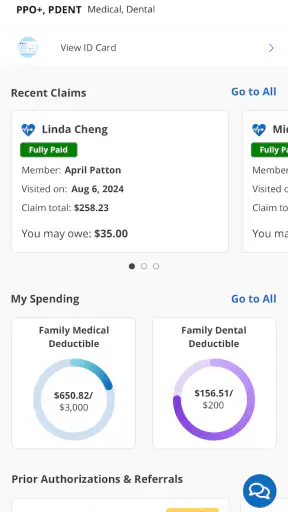
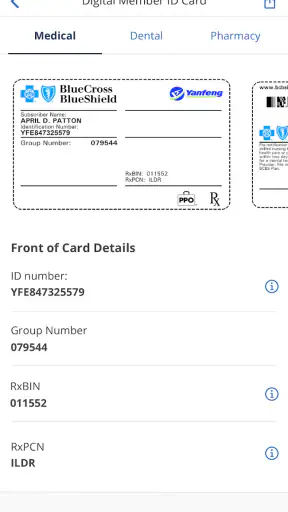
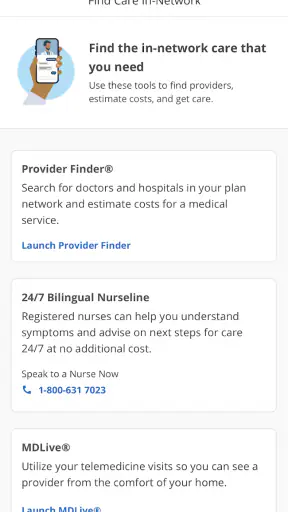
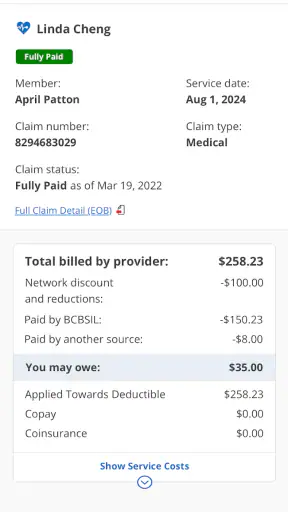
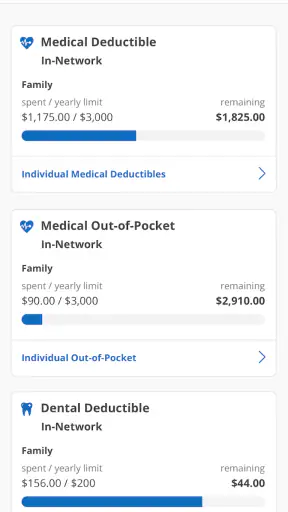
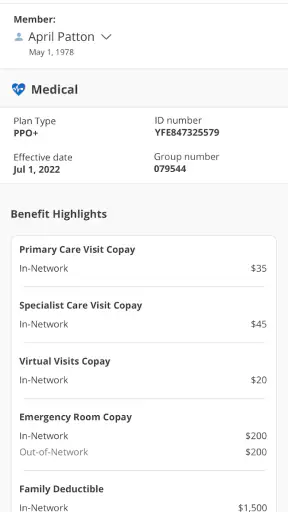
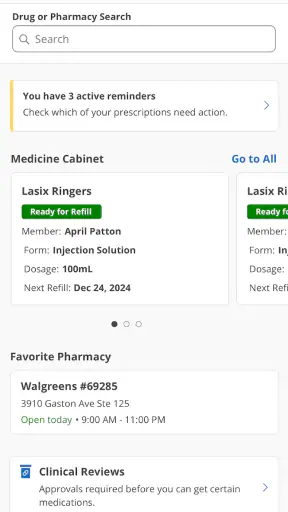
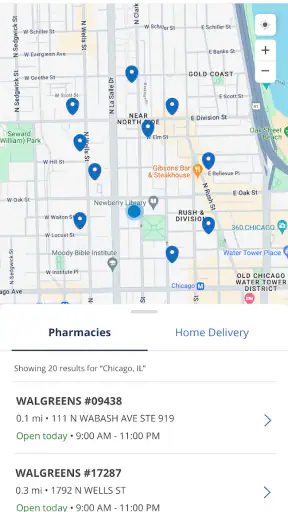
Managing health insurance is rarely difficult because of one big task. It is difficult because several small tasks arrive at the wrong moment: finding a member card before an appointment, checking what information belongs to your plan, or remembering where to look when you are away from home. BCBSTX is built around that practical problem. It is a free medical app from Blue Cross and Blue Shield of Texas that puts member information into a mobile format instead of making you depend entirely on paper documents or a desktop browser.
I found its most useful capability to be quick access to member information. That sounds simple, but it changes the experience when you are checking in at a clinic, speaking with a pharmacy, or helping a family member organize insurance details. The app is not trying to replace medical care, and I would not treat it as a diagnosis or emergency tool. Its value is narrower and more concrete: it gives BCBSTX members a convenient place to handle the insurance side of everyday healthcare.
Member information that is easier to reach
The app’s identity is clear from the moment you think about its purpose. BCBSTX is a medical utility for people covered by Blue Cross and Blue Shield of Texas, not a general wellness tracker or a symptom checker. That focus is important because it sets the right expectation. You open it when you need information connected to your membership, rather than when you want exercise coaching, medication reminders, or a broad health dashboard.
In my experience, the strongest benefit of moving member information onto a phone is reducing the number of places you have to search. Insurance details can otherwise be split between a wallet card, email messages, saved browser pages, and employer paperwork. A dedicated app gives that information a more obvious home. When a receptionist asks for insurance details, the practical advantage is not that the app performs a dramatic task; it is that I can start with one familiar tool instead of reconstructing the answer from memory.
That makes the app especially relevant for people who use healthcare in ordinary, slightly rushed situations. A routine appointment can become stressful when you are already late and cannot find the right card. A pharmacy visit can be slowed down by uncertainty about which plan information is needed. Keeping the app available gives me a better preparation habit: I can check the relevant member information before leaving, rather than waiting until I am standing at a counter.
The audience is also reflected in its broad availability. The app is rated for Everyone, costs nothing to download, and has reached over one million installs. Its average rating is 4.6 from around ten thousand ratings, with roughly two thousand written reviews. Those figures suggest that the straightforward member-information approach is useful to many people, although popularity alone does not guarantee that every member will find the experience equally convenient.
What the focused design gets right
I appreciate that BCBSTX does not need to pretend to be a complete personal health system. A focused insurance app can be more useful than a crowded application that mixes claims, wellness content, provider searches, health records, and promotional material without making the basic member details easy to reach. When the immediate need is administrative, clarity matters more than variety.
There is also a useful distinction between information access and healthcare decision-making. The app can support the process around care, but it should not be the place I rely on for urgent medical guidance. If I have severe symptoms, I need appropriate medical help, not an insurance screen. If I need a detailed clinical history, I should use the relevant provider or health-record system. BCBSTX makes the most sense when the question is, “What member information do I need for this insurance interaction?”
How I would use it in practice
The most reliable workflow begins before the appointment. I would open the app at home, sign in if required, and review the member information I may need. That small check can reveal whether I have the right details ready, whether my phone has enough battery, and whether I need to bring anything else. It is a better approach than assuming the app will solve every problem at the front desk.
For a medical visit, I would use it as a reference while checking in. I would keep the relevant screen available, confirm that the information matches the appointment paperwork, and show it only to the staff member who needs it. This is one of the less obvious benefits of a mobile member tool: it helps me separate preparation from conversation. Instead of reading information aloud from memory, I can use the app as a visual reference and reduce avoidable mistakes.
A similar routine works at a pharmacy. I would not assume that every pharmacy interaction is identical, but I would have the app ready before reaching the counter. If the pharmacist needs insurance-related details, I can consult the member information without searching through old messages. That does not guarantee approval or resolve every coverage question, yet it can make the first exchange more orderly.
Another useful scenario is helping a relative. Family healthcare often involves one person finding information for another, especially when an appointment is being arranged quickly. I would use the app to prepare the details, then let the clinic or pharmacy handle its normal verification process. The important trade-off is privacy: I would avoid leaving the phone unlocked or handing it over unnecessarily. Convenience should not mean losing control of personal health information.
A practical routine for fewer surprises
I would treat the app as one part of a backup plan rather than the only proof of coverage. Before an important visit, I would make sure I can access my account, keep my phone charged, and carry any physical documentation I normally use. This is not a criticism of BCBSTX specifically; mobile access always depends on the phone being available and functioning when needed.
I would also avoid assuming that seeing member information on screen answers every administrative question. A member card or account view can help identify the plan, but a provider may still need to verify eligibility, and a pharmacy may still need additional information. The app is most effective when I use it to begin the conversation, not when I expect it to replace the provider’s or pharmacy’s own process.
For people who frequently switch between work, home, and appointments, the app can become a simple pre-visit checkpoint. I would open it the night before a planned visit, confirm that I know where the information is, and then leave it alone until needed. That is more efficient than repeatedly searching through the app during a stressful moment. The real improvement comes from the habit around the tool, not from opening it constantly.
The best everyday scenario
The clearest use case is a routine appointment arranged on short notice. Imagine receiving a call that an earlier slot is available and leaving work with only a few minutes to prepare. I would open BCBSTX, check the member information, and make sure I am not relying on an outdated paper card buried in a wallet. At the clinic, I would have a practical reference ready while the staff completes its normal check-in.
That scenario shows why the app’s narrow purpose can be a strength. I do not need a library of health articles at that moment. I need to reduce friction between arriving at the clinic and giving the information requested. The app will not make the appointment shorter in every case, but it can remove one avoidable search from the process.
It is also useful when traveling within the area where I normally receive care. People do not always remember which wallet card they brought or where they placed paperwork. A phone-based option gives me another way to reach the information connected to my membership. I would still prepare for situations where a facility wants a physical card or performs its own verification, but the app gives me a reasonable first option.
The same benefit applies to a new pharmacy conversation. Rather than guessing which details matter, I can consult the member information and let the pharmacist tell me what is needed next. This is a subtle but valuable workflow improvement: the app helps me arrive informed without encouraging me to make coverage decisions based on assumptions.
Where it is less useful
BCBSTX is not the right choice if I want a complete health-management platform. Someone looking for workout plans, food logging, symptom analysis, mental-health exercises, or a unified record from several unrelated providers should look elsewhere or use additional tools. The app’s purpose is tied to BCBSTX membership, so its usefulness naturally drops for people insured through another organization.
I would also skip relying on it as an emergency resource. In an urgent situation, the priority is medical attention, not locating insurance information. Even for a non-urgent issue, the app cannot replace a conversation with a clinician when I need diagnosis, treatment advice, or interpretation of symptoms.
People who strongly prefer paper may not gain much from it. If a member already keeps a physical card in an easy-to-reach place and rarely needs to check related information, installing another app may add little. The strongest case is for people who misplace documents, move between locations, or want a digital reference available alongside their normal paperwork.
Trade-offs I noticed before making it part of a routine
The first trade-off is convenience versus dependence on a phone. A mobile member-information tool is faster than searching a drawer, but it depends on the device being charged, available, and usable. I would not discard physical documents immediately. Keeping a backup is sensible for appointments where check-in requirements are unfamiliar.
The second is simplicity versus breadth. Because BCBSTX concentrates on member information, it may feel refreshingly direct when that is all I need. At the same time, users expecting one app to organize every aspect of healthcare may find the scope limited. I see that as a design boundary rather than a flaw, but it matters when deciding whether this should be my main health app.
The third trade-off concerns interpretation. Having information visible does not automatically explain what every insurance term means or predict the outcome of a claim. I would use the app to locate and present member details, then ask the insurer, provider, or pharmacy when a decision requires clarification. This prevents a common mistake: treating access to information as the same thing as understanding coverage.
There is also a practical privacy consideration. A phone is easy to carry, but it can be seen by other people. I would avoid displaying member details in a crowded waiting room longer than necessary, use my device’s normal security protections, and close the screen after showing the required information. Those habits are especially important when someone else is helping with an appointment.
What the version and history suggest
The app has been available since December 17, 2010, and the current version is 7.29.0. That long presence matters to me because an insurance app needs to fit into an ongoing membership relationship rather than serve as a one-time novelty. I would still install updates when offered, since account-related applications need to stay compatible with current phones and service changes.
Its minimum operating-system requirement is iOS 9 or later. That makes the app relevant to people using older Apple devices, although I would still check how comfortably it performs on a particular phone before depending on it for an appointment. Older hardware can introduce its own delays, especially when a user is already in a hurry.
The developer is Blue Cross and Blue Shield of Texas, which gives the app a direct connection to the organization named in its purpose. That is useful for members who want an official channel rather than a third-party insurance organizer. It also means the app is not designed as a universal wallet for policies from several insurers. Its value comes from being specific to the BCBSTX relationship.
Who benefits most from keeping it installed
I would recommend BCBSTX most strongly to current members who attend appointments regularly, manage insurance details for a household, or dislike carrying paperwork. It is also a good fit for someone who often needs to present member information away from home. The app’s free price removes the main financial barrier, and its Everyone age rating makes it approachable for a wide range of users.
It can be particularly helpful for a person who is new to managing their own healthcare. Instead of relying entirely on a parent, partner, or office administrator to find insurance details, the member has a dedicated place to start. I would still encourage that person to learn what the information means and understand when to contact the insurer, but the app can support a more independent routine.
Caregivers may also appreciate the convenience, with an important qualification: access should be handled with the member’s permission and with care. The app can help organize a conversation with a clinic, but it should not encourage casual sharing of private information. Used thoughtfully, it reduces searching without removing the member’s control.
I would be less enthusiastic for someone who is not a BCBSTX member, wants a cross-insurer tool, or expects detailed clinical features. In those cases, a provider’s patient portal, a broader health-record application, or a direct conversation with an insurer may be the better primary option. BCBSTX works best when the problem is specific and the membership connection is real.
After using it as a member-information companion, my opinion is positive but measured. The app earns its place by making a small, recurring healthcare task easier, not by trying to become everything at once. I would install it before an appointment, prepare the needed details in advance, keep a backup for important visits, and use professional help whenever the question moves beyond basic member information.
For the right user, that is enough to make a difference. BCBSTX is free, focused, and built by Blue Cross and Blue Shield of Texas for its members. I would recommend it to anyone who wants a more dependable mobile starting point for insurance-related interactions, while being honest that it is not a replacement for medical advice, provider records, or a complete healthcare-management system.


